



University of Applied Arts Vienna Holy Cross Courtyard Marble Portal
The entrance to the University of Applied Arts in Vienna, Austria, is part of the Holy Cross Courtyard, a courtyard complex in the center of Vienna. It is located between the streets of the beautiful Lantern and Grashov, and is today surrounded by a complex of monastery courtyards, abbeys, houses of worship and apartment buildings. The courtyard of the Holy Cross is often called the oldest apartment building in Vienna. It was built in the 13th century and has since then belonged to the Sist Monastery of the Holy Cross. Most of the chapel of the courtyard and the courtyard of the abbot were demolished during the Baroque period and rebuilt by order of the abbot of the Abbey of the Holy Cross between 1659 and 1676.

The marble statue of Dioscuri in Copenhagen Square, Denmark
Dioscuri was a twin deity in ancient Greek and Roman mythology. They rescued the shipwrecked crew and were given a good wind by people offering sacrifices. Their mother was Leda and their father was Zeus, the king of the gods. Later Zeus placed them in the sky and became Gemini. In Rome, tradition holds that reverence for them was introduced in 484 BC. Orus Pastumius built their shrine on the square right after he swore at the Battle of Lake Rejilus. Legend has it that in this battle, Dioscuri fought on the side of the Romans and brought news of the victory to Rome.

Marble statue of Mozart Monument in the Royal Gardens of Vienna, Austria
The statue is the Mozart Monument, which is located in the Royal Gardens of Vienna, Austria. Designed by architect Karl Connich and sculptor Victor Tilgner, the statue was unveiled in Albrechts Square in 1896 and moved to its current location in 1953. The statue commemorates the famous musician Wolfgang Amadeus Mozart (1756-1791), one of the representatives of classical music.
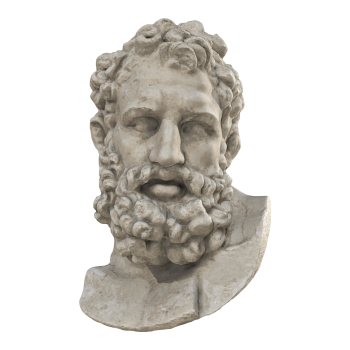
Marble statue of Hercules of FarNese at the National Archaeological Museum of Napoli, Italy
The original of the statue is bronze but has been lost, and the extant is a Roman-period marble replica, in several different sizes and versions. One of the most famous replicas is Farnessey Hercules, created in 212 by the sculptor Grikhon and now in the collection of the National Archaeological Museum of Napoli, Italy. The statue depicts Hercules, who has just completed his twelve drudgery, with a haggard face and melancholy eyes, showing his humanity and tragedy.

Marble statue of Armand-Jean-di Plessy de Richelieu in the city of Ambwaz, France
The statue was created by Henry Alua (1844-1929) and was completed in 1895. The statue is 3.5 meters high and depicts Richelieu standing on a base with four reliefs holding a book. His full name was Armand-Jean-di Plessy de Richelieu, also known simply as Richelieu, or Cardinal, because he was a cardinal and wore a red robe. He was the first Duke Richelieu of Bourbon and Prime Minister of Louis XIII. He had a great influence on the centralization and foreign policy of France.

French geometric design marble lover statue ornaments
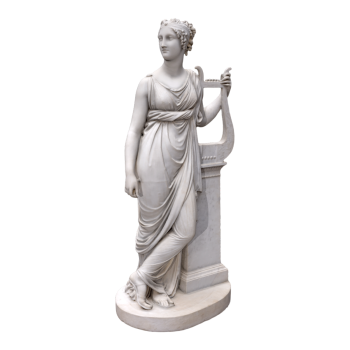
Marble statue of the Cleveland Museum of Art The Muse of Poetry
The Poetic Muse in Ancient Greek Mythology She is one of the nine Muses who inspired her creation. She holds a lyre and has a double snake-wound staff. The statue was carved out of marble by Italian sculptor Antonio Canova in 1816. It is one of nine muse statues designed by Canova for Tsar Alexander I of Russia. The statues were originally intended to be placed in the Hermitage Museum in St. Petersburg, but they were scattered to different places due to the sudden death of the Tsar. The Poetic Muse was eventually acquired by the Cleveland Museum of Art in 1968. It is one of the museum's most important collections.
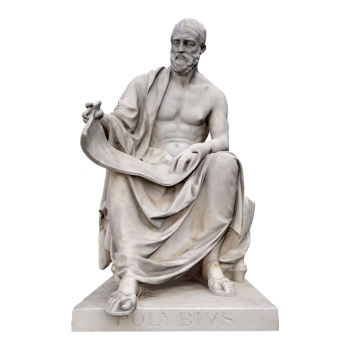
Marble statue of the Austrian Parliament building Polybios
Polybius (Polybios) It was created in 1899 by the Austrian sculptor Alois Düll, carved from marble. It is in honor of the ancient Greek historian Polybios, best known for his major work "History", which originally had 40 volumes and described the universal history of Rome from the beginning of the First Punic War to the destruction of Carthage and Corinth.

The Abduction of Prosopina in Marble at the Bogise Gallery in Rome
The Abduction of Proserpina is a large group of Baroque marble sculptures by Gian Lorenzo Benigni. The sculpture depicts a Roman mythology in which Pruto, the god of the underworld, captures and takes Prosopina. Pruto exalts Proserpina, while Serborus symbolizes the border of the underworld into which Pruto brought Proserpina. The sculpture is made of Carrara marble and was originally placed on an already destroyed pedestal with a poem by Barberini Maffeo. The sculpture is now located in the Bogise Gallery in Rome.
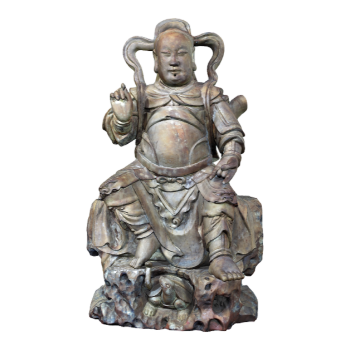
Marble statue of Emperor Zhenwu
Zhenwu Emperor, also known as Xuantian God, Xuanwu Emperor, Yousheng Zhenjun Xuantian God, and Insufficient Patriarch, is the full name of Zhenwu Dangmo Emperor. He is the northern god in Han myths and legends, and is the famous Yujing Zun God among Taoist immortals. At present, the main god enshrined in Wudang Mountain in Hubei Province is Emperor Zhenwu, who is called "Zhen Zhen Zhen Zhen Zhen Wu Ling Ying You Sheng Emperor" in the Dao Jing, and is referred to as "Zhenwu Emperor" for short ". Han folk called the Lord of the Demon, the Patriarch of Reporation, and the Patriarch of the Hair. After the Ming Dynasty, it had a great influence on the whole country, and the folk beliefs Han modern China were particularly common.

Roman marble statue "The Girl Who Throwed the Bone"
The Bone Throwing Girl is a statue depicting a young girl playing a game of bone craps. This ancient Roman marble statue dates back to about 1500 AD and was restored in the 18th century by Italian sculptor Giuseppi Angelini(1735-1811). The statue was originally a collection of Charles Townley, which he described as a figure of Diana lying down in a tight dress with her left hand supporting her body and her right hand extending forward.

Cross Hill Crucifixion Group
This sculpture is part of a hill of the cross (Calvary) located in the city of Reitz, Lower Austria, and is a group of sculptures depicting the crucifixion of Jesus. The Hill of Crosses was built in 1727 by the citizens of the city of Reitz as an expression of gratitude to commemorate the Black Death pandemic of 1713. The sculpture was created by an unknown artist, but his style was influenced by the Baroque period, especially the work of the Austrian sculptor Johann Dominic Dorner.

Popular Models

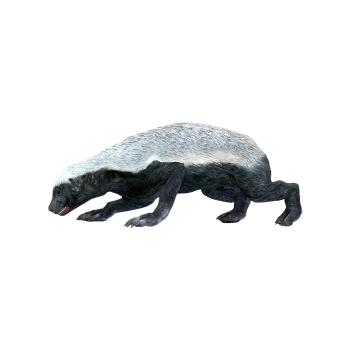
Honey Badger (3D animated model)
192 View
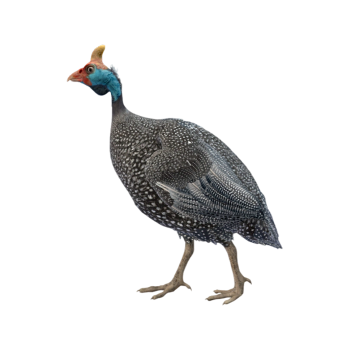
Guinea fowl (3D animated model)
163 View
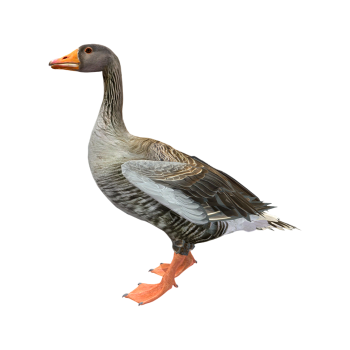
Wild Goose (3D animated model)
185 View

Red Fox (3D animated model)
153 View
Random Model

Portable Military Kettle
899 View


Raft Tuomo statue
832 View
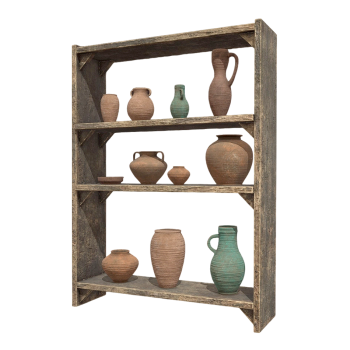

Dome shaped dinosaur skull fossil
1335 View

Yi Beike
996 View

TankGuyT T-Shirt
808 View



Old-fashioned tipper truck
1020 View